







Used by leading PRODUCT teams AT
.png)
CUSTOMER INTELLIGENCE PLATFORM
Go beyond AI summaries to what to ignore, fix or build
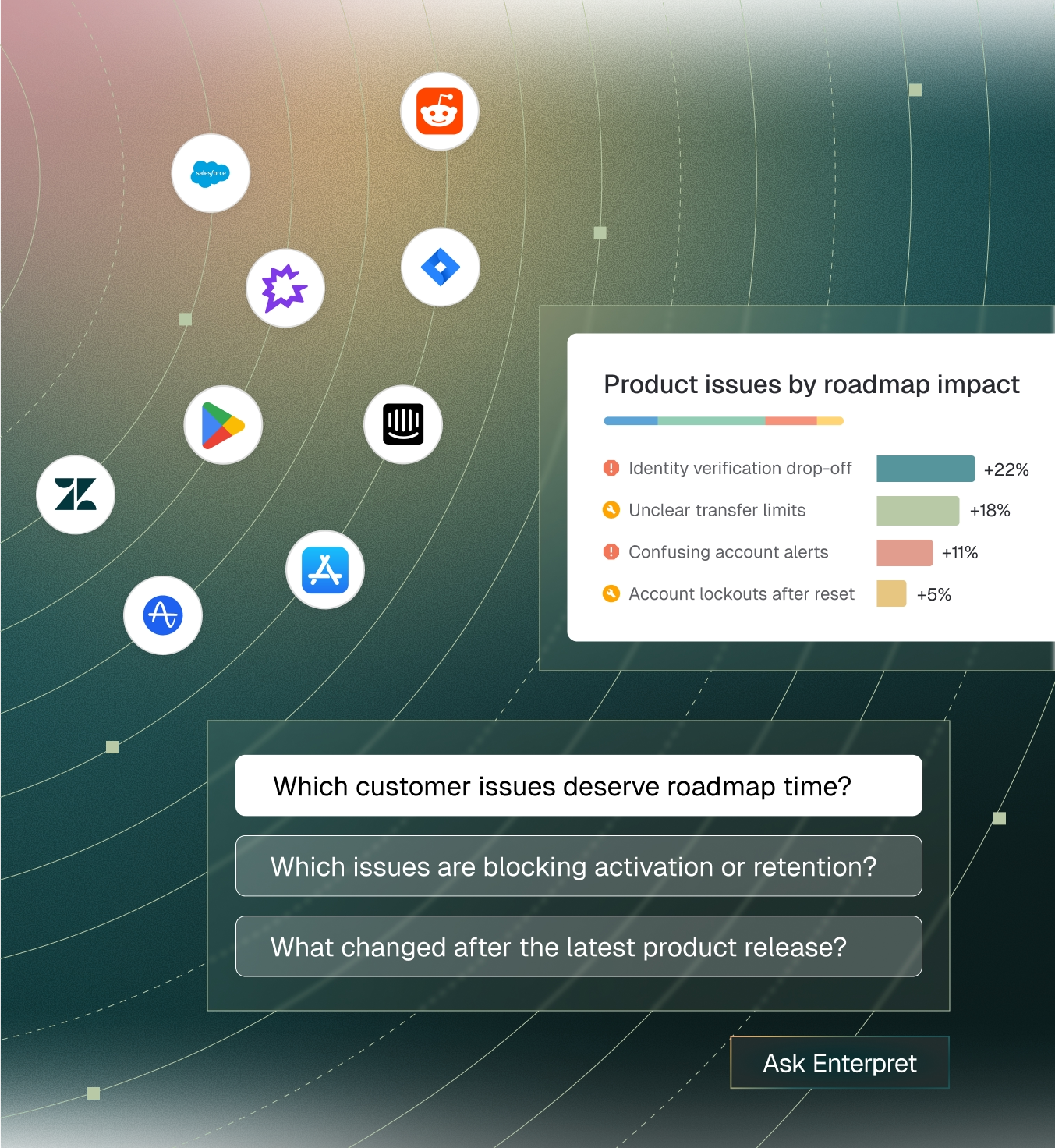
AI can make feedback look decision-ready. Connect the root cause, impact & evidence before a clean summary becomes the wrong roadmap call.

.png)



.png)

The problem
AI summarized the feedback.
But is the roadmap call actually clear?
A clean AI summary can hide a broken pattern
Clean themes can hide bad grouping: related signals split apart, unrelated requests merged together, and the roadmap starting from the wrong issue.
Loud feedback creates false confidence & priorities
The loudest theme can feel like the obvious next bet. But without usage, segment, and product context, teams can move fast on the wrong signal.
The wrong call gets harder to catch later once on the roadmap
Once a theme becomes a roadmap item, it’s harder to unwind. Without evidence, teams can keep defending a decision that started from the wrong read.
.svg)
The Hidden cost
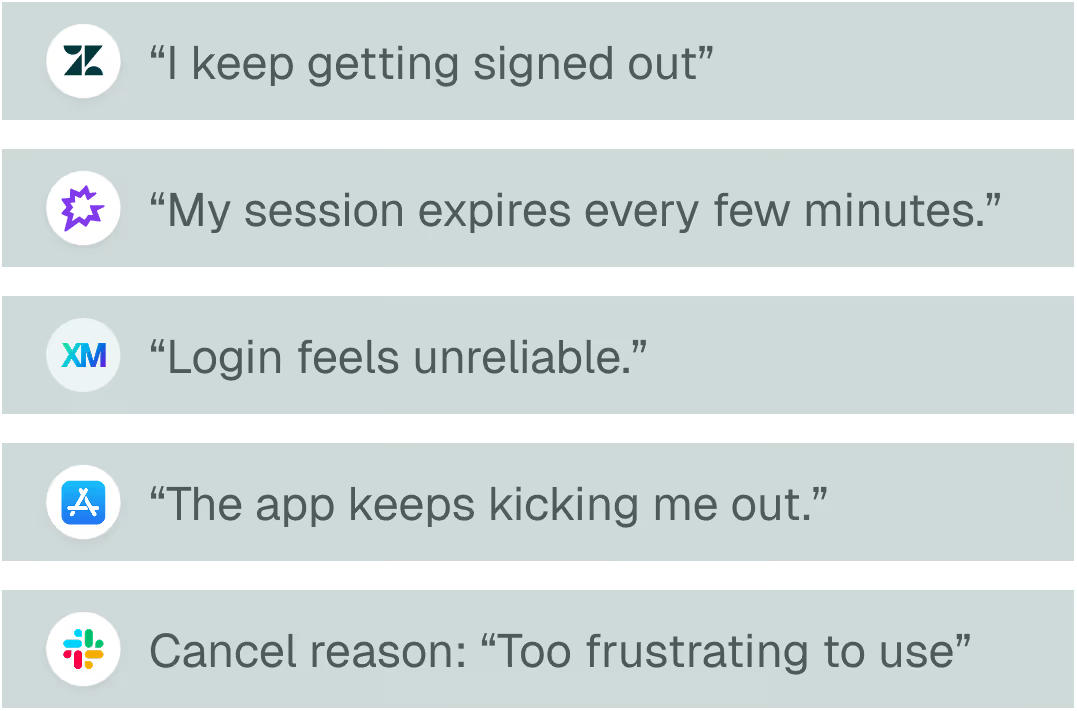
One issue, many different signals
Different words, across different channels
.svg)
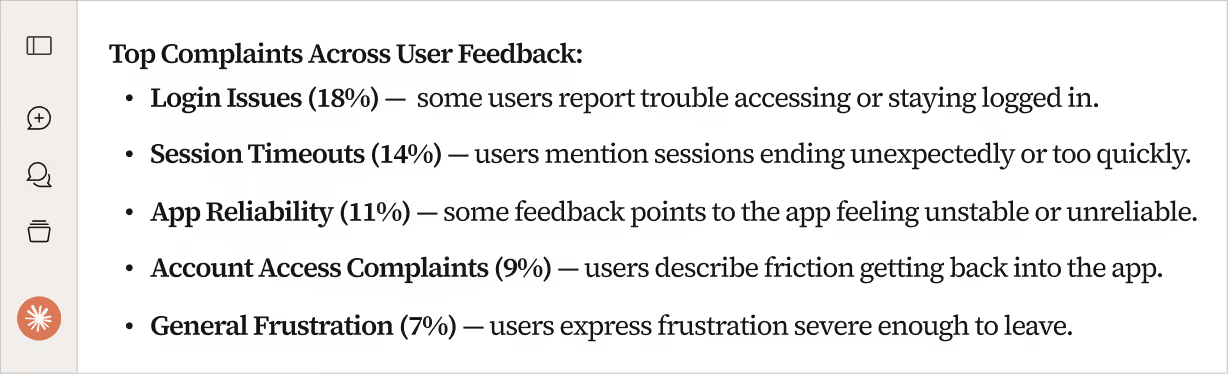
AI can split the signal into false priorities
One issue gets split, counted, and treated as separate roadmap inputs
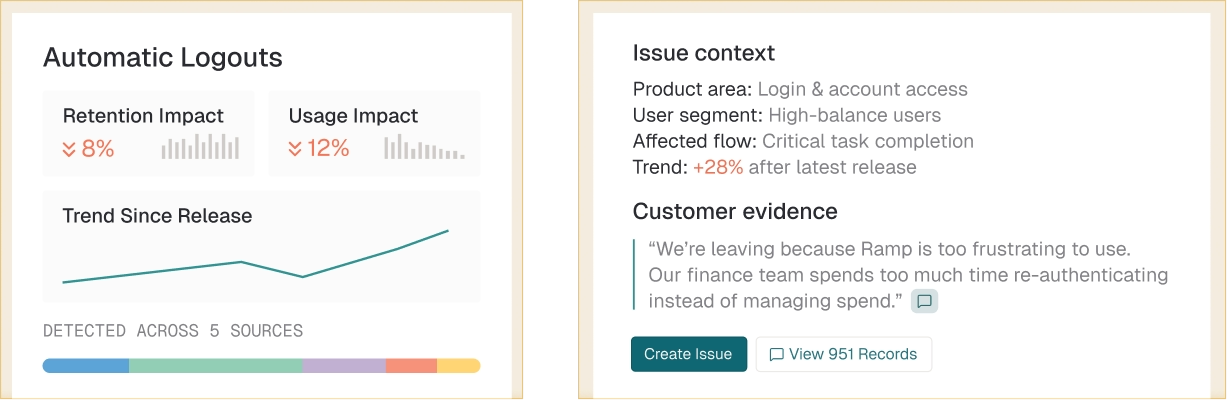
Enterpret structures it by context and impact
Connected as one issue, tied to retention, revenue, and the evidence
THE SOLUTION
Turn AI summaries into roadmap decisions you can trust
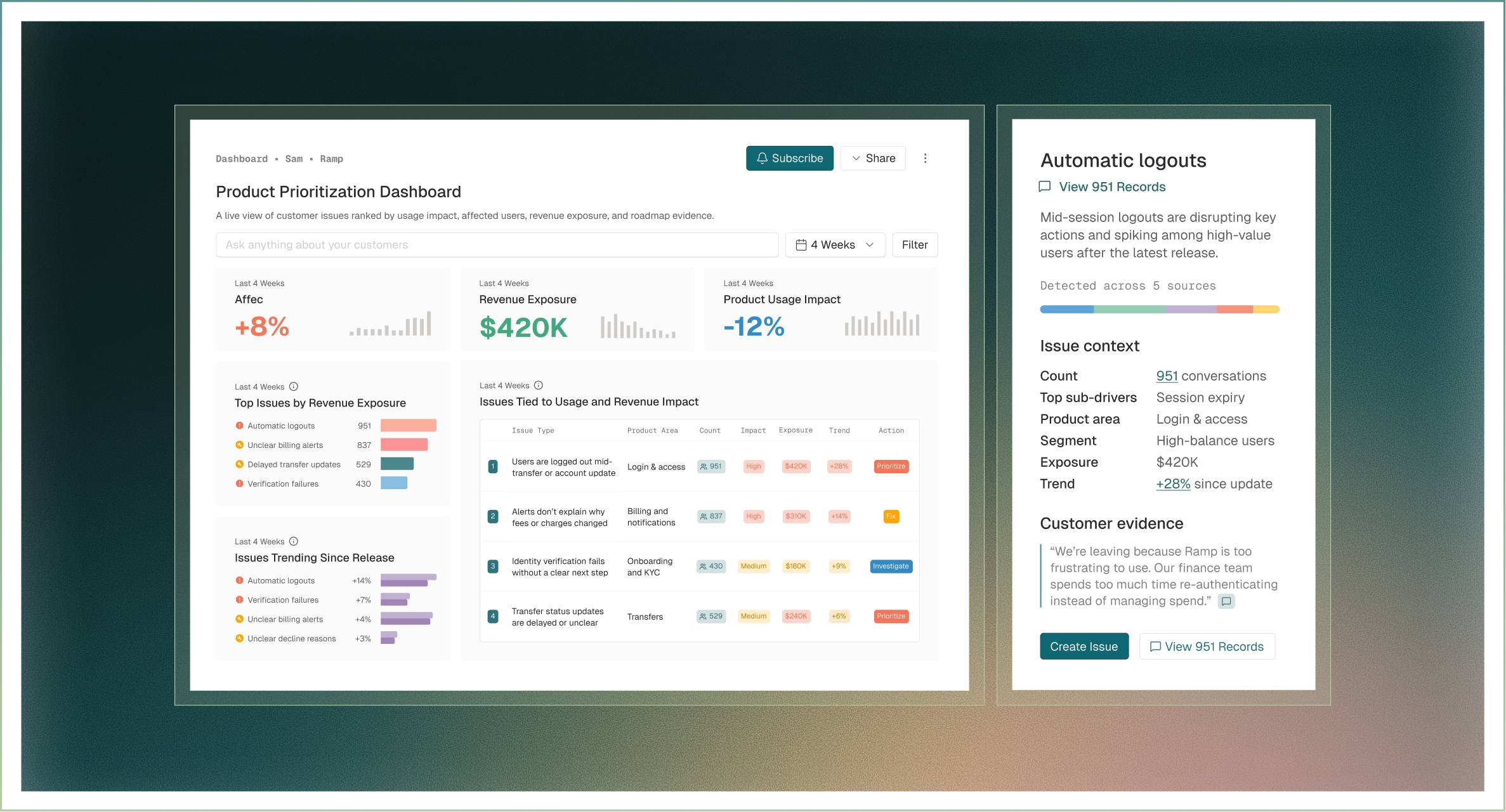
Enterpret connects customer feedback to the product issues behind it, ranked by impact and backed by evidence, so PMs can decide what to ignore, fix, or build with confidence.
.png)
How it works
From messy feedback to the right roadmap call
.avif)
Connect feedback across every source
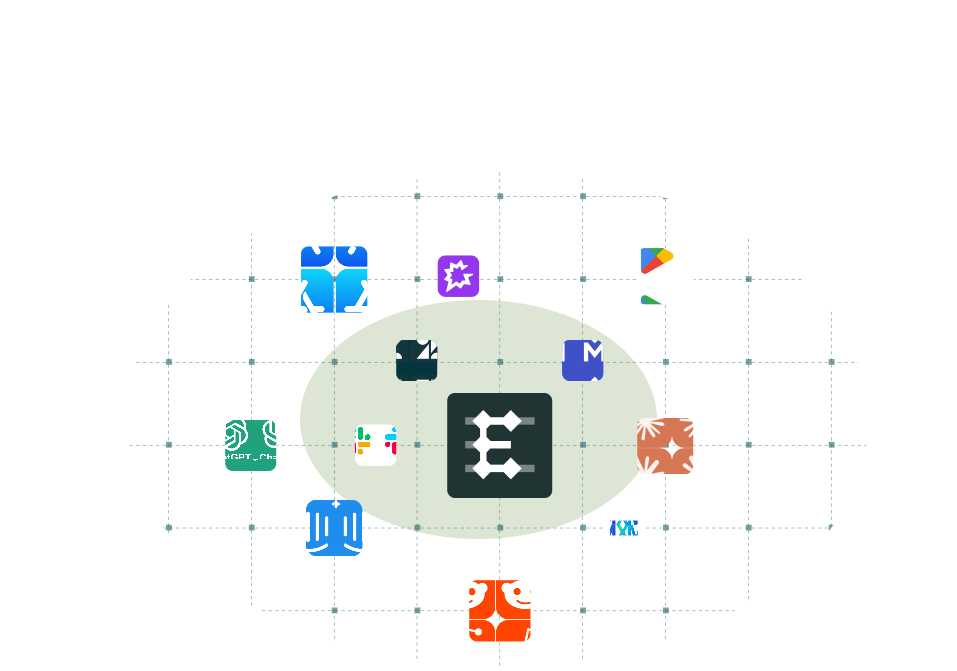
Unify every feedback source into one structured view of product issues, usage impact, and evidence
.avif)
Tie each issue to impact and context
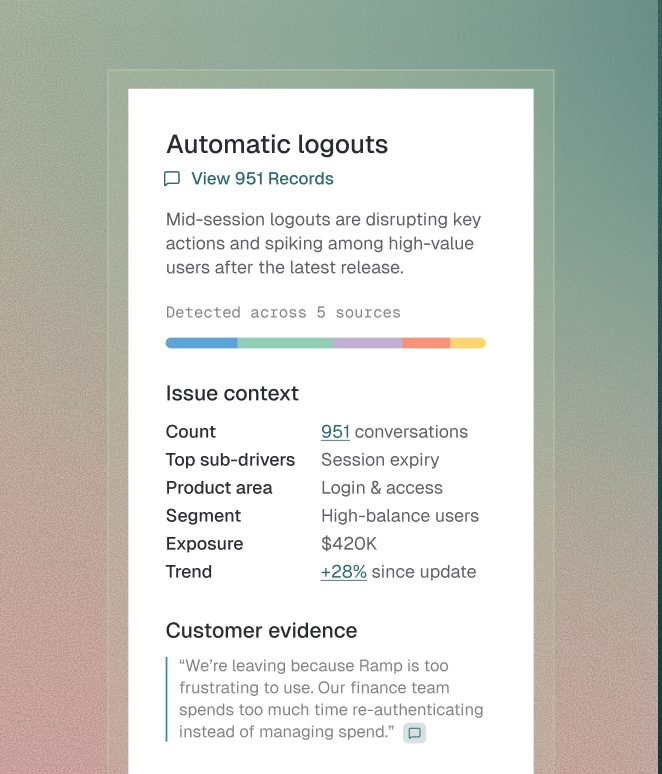
See which users are affected, where the issue appears, and impact to adoption, retention or expansion
Defend what to ignore, fix, or build
Use the evidence to make the roadmap call, align stakeholders, and avoid prioritizing on volume
Try Enterpret in one minute



.svg)
.svg)


“With Enterpret connected to our customer feedback and subscription data, we can draw a direct line from customer problems to revenue at risk.
We can literally say: these users have written in more than five times this month, this is a likely churn risk, and that we might lose $500k a month from this.
We can see a direct line from customer problems to how much money is at risk.”
We can literally say: these users have written in more than five times this month, this is a likely churn risk, and that we might lose $500k a month from this.
We can see a direct line from customer problems to how much money is at risk.”
MIGUEL POU
CX AI OPERATIONS

“We surface product insights in days not weeks where our teams now have the necessary insights and feedback to prioritize their roadmaps.
Enterpret connects millions of our feedback records, helping align everyone around the top issues or requests and make it accessible to all our teams."
Enterpret connects millions of our feedback records, helping align everyone around the top issues or requests and make it accessible to all our teams."
JESSE WALKER
SENIOR PRODUCT LEAD

“We were able to focus on shipping high-value features instead of bug fixes and ‘keep-the-lights-on’ work. Instead, we leverage engineering resources to ship significantly awesome and valuable features"
ABISHEK VISWANATHAN
CHIEF PRODUCT OFFICER


Frequently Asked Questions
Product teams use Enterpret to analyze customer feedback across tickets, calls, surveys, reviews, and other customer channels, so they can understand which requests, complaints, and product issues are worth acting on. Instead of stopping at AI summaries or manual tags, or anecdotal feedback, Enterpret helps PMs see which issues are recurring, growing, tied to customer pain, and backed by real evidence.
With Enterpret, product teams can separate noisy feedback from high-impact product opportunities, prioritize what to fix, identify what to build next, and understand which requests to ignore or monitor. Each product insight is connected to customer evidence, source coverage, segments, and business impact, helping PMs make roadmap decisions with more confidence.
Customer intelligence software helps organizations collect, analyze, and operationalize omnichannel signals across support, sales, product, surveys, reviews, and market conversations.
Traditional customer intelligence platforms often focus on dashboards or AI summaries. Customer intelligence infrastructure goes further by continuously structuring customer signals into shared customer understanding connected to product context, customer segments, business outcomes, workflows, and AI systems over time.
This helps teams prioritize based on business impact instead of signal volume, operationalize customer understanding across workflows, and measure what actually changed after product and business decisions are made.
Enterpret acts as the infrastructure layer behind customer understanding, helping teams move from disconnected customer signals and one-off AI answers to a continuously evolving system of understanding and actionable insights that compounds over time.
AI tools like Claude or ChatGPT can quickly analyze customer signals and generate summaries, answers, and workflows. The challenge is that the underlying understanding often resets with every new prompt, workflow, or analysis.
A customer intelligence platform continuously structures customer signals into shared customer understanding connected to product context, customer segments, business outcomes, and operational workflows over time.
This allows teams and AI systems to:
- Prioritize based on business impact (churn, NPS, CSAT, etc.) instead of mention volume
- Maintain consistent understanding across workflows
- Operationalize customer understanding into actionable insights, tickets, alerts, prioritization, and AI workflows
- Measure whether launches and decisions actually improved retention, adoption, support burden, and revenue outcomes
Enterpret works alongside AI tools by providing the customer intelligence infrastructure that keeps customer understanding connected, measurable, and continuously evolving.
Enterpret connects support tickets, sales calls, surveys, reviews, social conversations, market research, community discussions, CRM data, and product usage signals into one continuously evolving omnichannel system of customer understanding.
Teams use Enterpret to:
- Prioritize product decisions based on customer and business impact
- Identify the issues driving churn, NPS, CSAT, poor adoption, and expansion risk
- Understand problems along the customer journey increasing support burden and ticket volume
- Surface sales objections, deal blockers, and product gaps from customer conversations
- Track changing customer expectations, competitor movement, and market trends
- Power AI workflows with shared customer understanding across systems and teams
- Connect customer signals to retention, adoption, expansion, and revenue outcomes
- Measure whether launches, fixes, and product decisions actually worked over time
Yes. Enterpret integrates with AI tools, collaboration systems, ticketing platforms, CRMs, and internal workflows through native integrations and MCP-compatible workflows.
Teams use Enterpret to:
- Power AI workflows with shared customer understanding
- Create tickets, alerts, and workflows directly from customer insights
- Operationalize prioritization across Jira and Linear
- Bring customer understanding into Slack, Claude, CRMs, and internal systems
- Keep customer, product, and business context connected across workflows
Many organizations can connect customer data to AI tools internally. The challenge is maintaining consistent customer understanding over time as products, customer behavior, workflows, and business priorities evolve.
Teams use Enterpret because it continuously structures customer understanding across workflows, systems, and AI interactions instead of relying on disconnected prompts, manually maintained taxonomies, or one-off analyses.
This allows organizations to operationalize customer understanding across prioritization, support operations, churn and sentiment analysis, and AI workflows without rebuilding the underlying understanding repeatedly.
Enterpret is used by product, customer experience, support, operations, and GTM teams at high-velocity product organizations.
Teams use Enterpret to:
- Prioritize product decisions
- Identify churn risk, expansion opportunities, and deal blockers
- Reduce support burden
- Operationalize customer intelligence
- Power AI workflows
- Connect customer understanding to measurable business outcomes

