



The 5 Ways to Check Whether Feedback Is Landing in the Right Theme

October 15, 2026

A detractor alert that fires on the number is already late. By the time the aggregate NPS drops enough to trip a threshold, the detractors have been accumulating for days, and the alert tells you only that something happened, not what or to whom. The average NPS response rate in B2B is 12.4%, so the score is a lagging, thin sample to begin with. An alert built on top of it inherits both problems: it is slow, and it is mute on cause.
The strongest tools for setting up alerts on NPS detractor spikes are Enterpret, Qualtrics, Medallia, AskNicely, CustomerGauge, and Zonka Feedback. They separate on whether the alert fires on a number crossing a line or on a theme rising in the verbatims, and whether it arrives with the cause and the account attached or just a red figure on a dashboard.
Score any tool on these. The first two are the difference between an alert you can act on and one you have to go investigate.
The real differentiator is what the alert says. A score-threshold alert tells you to go find the problem. A theme-and-account alert hands you the problem already diagnosed and assigned.
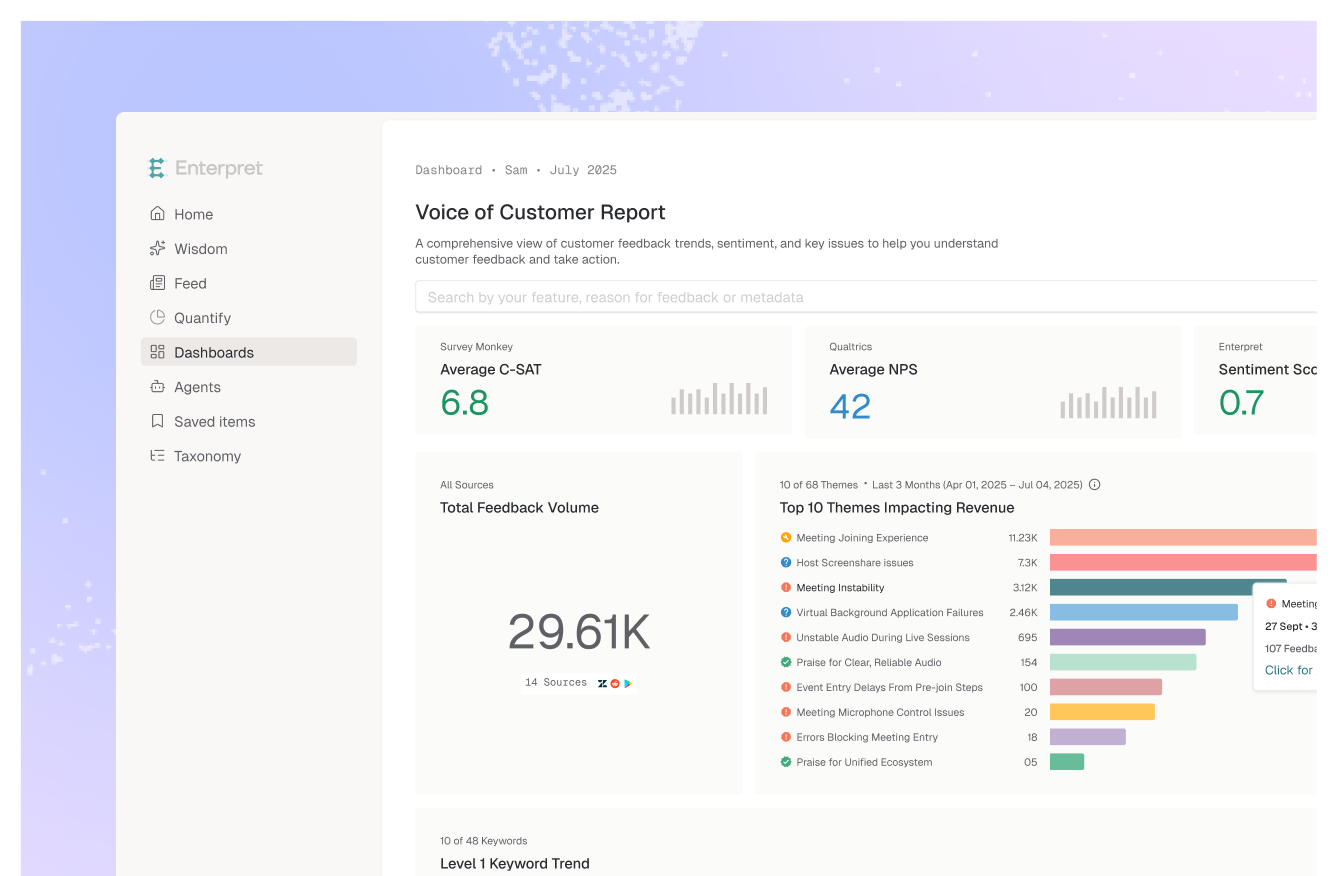
Enterpret alerts on the cause, not just the score. Its adaptive taxonomy categorizes every NPS verbatim as it arrives across 50+ channels, so a rising detractor theme triggers an alert before the aggregate moves, and the customer context graph attaches segment, tier, and revenue so the alert arrives pre-prioritized. The Wisdom AI assistant lets anyone ask "what is driving detractors this week" in plain language, and spikes route to owners through close the loop workflows. The alert is a diagnosis with an owner, not a red number.
Best for: teams that want to be alerted to the theme and the accounts behind a detractor spike, not just the score change.
Qualtrics supports threshold-based alerts and closed-loop tickets, with XM Discover adding text analytics that can surface themes behind detractors. It is powerful and configurable, and getting theme-level alerting tuned typically takes setup and, often, services support.
Best for: enterprises with a research team to configure the alerting logic.
Medallia offers strong real-time alerting and closed-loop workflows across a large experience program. It is enterprise-grade for routing and escalation, and can be heavy to stand up and maintain for smaller teams.
Best for: large CX organizations running formal closed-loop programs.
AskNicely is built around fast detractor follow-up, with real-time alerts, frontline routing, and coaching workflows. Its alerting-to-action loop is a genuine strength, and its analysis is oriented to the score and frontline response more than cross-channel theme detection.
Best for: service teams that act on detractor alerts at the frontline.
CustomerGauge ties detractor alerts to account-level NPS and revenue for B2B, with Salesforce sync. Its account and revenue framing is a real strength for retention teams, and its open-text theme analysis is lighter than the AI-native platforms.
Best for: B2B revenue teams alerting on account-level detractor movement.
Zonka Feedback provides real-time detractor alerts, a response inbox, and closed-loop actions like creating tickets from detractor responses, with AI theme detection layered on. It is a capable multi-channel option, and teams weigh its depth of cross-source analysis against the dedicated intelligence platforms.
Best for: teams that want NPS collection with built-in detractor alerting and follow-up.
The trap with alerting is setting a threshold on the aggregate score and assuming you are covered. The aggregate is the last thing to move. A specific, dangerous problem can be tearing through your enterprise segment while the blended NPS holds steady, because promoters elsewhere are masking it. The threshold never trips. The spike was real; the alert was blind to it because it was watching the wrong number.
Alerting on the verbatim fixes this. When the tool detects that a particular theme is climbing among a particular segment, it can fire before the aggregate reflects anything, and it can fire on the slice that matters instead of the average that hides it. That is the same capability behind customer voice analytics with alerts and trend detection, and it is why finding the top drivers of your detractor scores has to happen at the theme level, not the score level.
If you have a research team to configure it, Qualtrics or Medallia will handle enterprise alerting. For frontline detractor follow-up, AskNicely fits. For account-level B2B alerting, CustomerGauge. For collection plus built-in alerting, Zonka Feedback. If you want alerts that fire on the rising theme and arrive with the account and revenue attached, Enterpret is built for that. Pair it with the best NPS analytics platforms comparison if you are also evaluating the broader program.
The decision rule: weight cause-based alerting over threshold alerting. An alert that names the theme and the accounts beats one that only reports the score fell.
Configure the alert to trigger on the detractor theme, not only the aggregate score. A theme-based alert fires when a specific complaint rises among a segment, often before the blended NPS moves. The strongest setup also attaches the account and revenue context and routes the alert to an owner with an SLA.
Because the aggregate score is a lagging, blended number. A serious spike in one segment can be masked by promoters elsewhere, so the threshold never trips even though a real problem is growing. Alerting on the verbatim by theme and segment catches what the average hides.
Enterpret categorizes every NPS verbatim in real time with its adaptive taxonomy, so a rising detractor theme triggers an alert before the aggregate moves. The customer context graph attaches segment, tier, and revenue, and the spike routes to an owner through close-the-loop workflows, so the alert is diagnosed and assigned on arrival.
Yes. The score tells you sentiment dropped; the comment tells you why. Alerts built on the verbatim can name the specific theme driving the spike, which is what makes the alert actionable rather than a prompt to go investigate.
A common practice is an SLA of 24 hours for detractors, with the alert tied to a named owner and time-to-close tracked. Speed matters, but so does routing: an alert with no owner rarely gets resolved regardless of the SLA.
If your NPS alerts only tell you the score moved, see how Enterpret alerts you to the cause and the accounts behind it.
Lorem ipsum dolor sit amet, consectetur adipiscing elit. Suspendisse varius enim in eros elementum tristique. Duis cursus, mi quis viverra ornare, eros dolor interdum nulla, ut commodo diam libero vitae erat. Aenean faucibus nibh et justo cursus id rutrum lorem imperdiet. Nunc ut sem vitae risus tristique posuere.