







When product decisions are questioned, spreadsheets and ChatGPT don’t hold up.
While ad hoc tagging, spreadsheets, scripts, and LLM summaries hold up at low feedback volume, Enterpret replaces manual workarounds with the structure, context, and traceability required to make customer feedback reliable and actionable at scale.
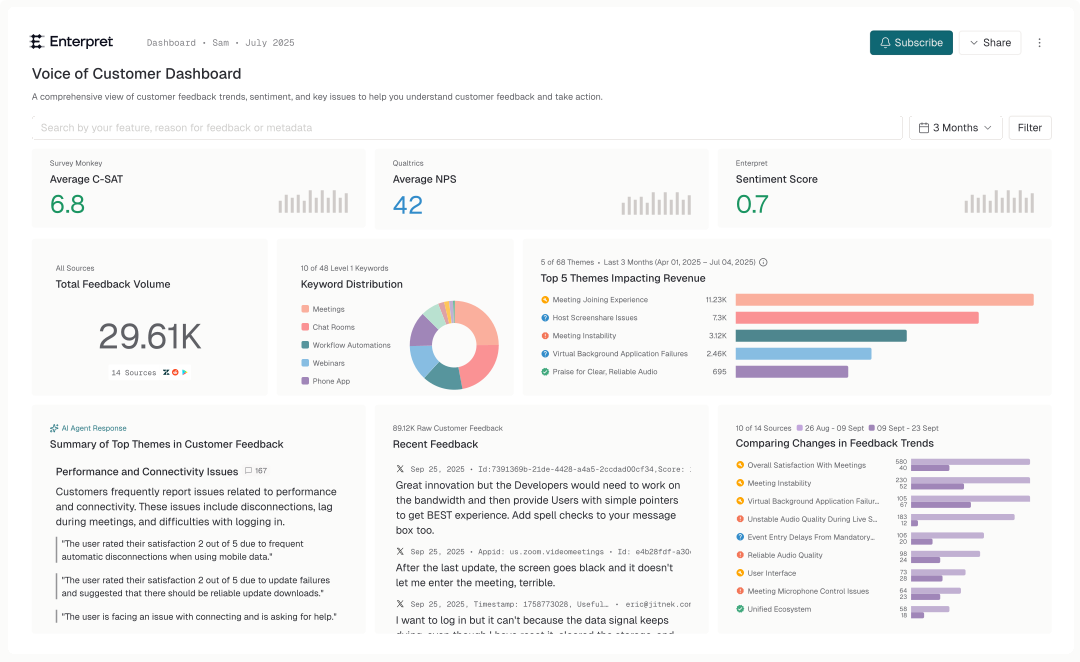
.svg)





















This usually works.
Until it doesn’t.
Most teams start the same way.
You pull feedback into spreadsheets so it’s all in one place.
You tag issues by theme to make sense of the volume.
You write a few scripts to speed things up.
At some point, you ask ChatGPT to summarize what customers are saying so you can move faster.
At first, it works. You can answer surface questions and patterns feel visible.
Then you’re asked to break it down by segment, to show which customers are actually affected, and to explain why this decision was the right call.
And that’s when doing it manually starts to crack.



How Internal Feedback Systems Break

What starts as a workable way to organize feedback becomes harder to maintain as volume increases and products evolve. Categories drift, edge cases pile up, and keeping things consistent takes far more ongoing effort than expected.

Summaries and counts work until decisions require detail. Questions about who is affected, how often issues occur, where they show up, or whether patterns are changing force teams to rebuild analysis every time instead of enabling insight.

Over time, more effort goes into fixing tags, rebuilding reports, and re-explaining context than into using feedback to guide product decisions. Product still owns the outcome, but the system no longer supports the work it was meant to enable.
Centralize feedback and organize by theme, feature & revenue impact
Let AI handle the heavy lifting by unifying feedback and structuring it into layered, customizable themes and reasons

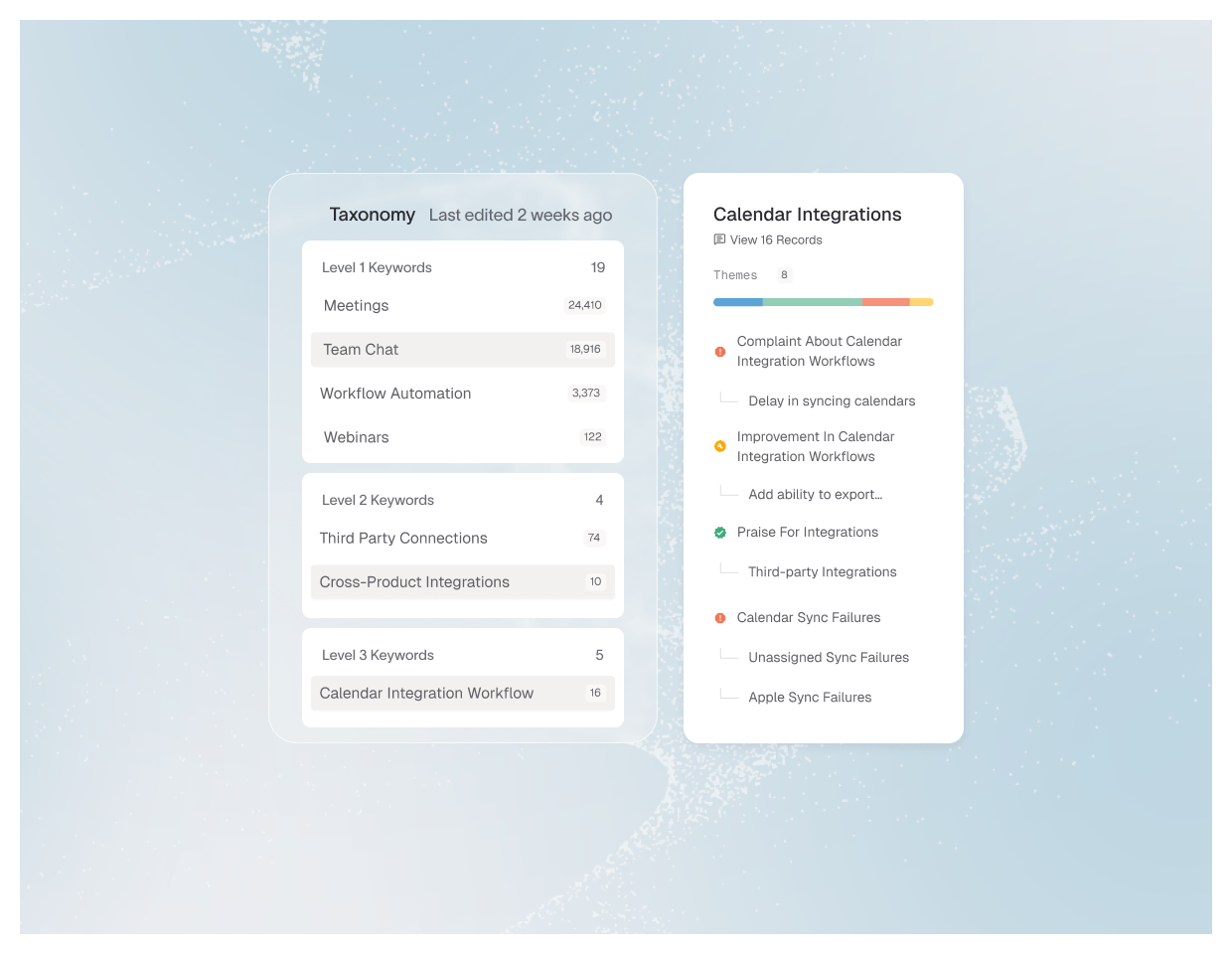
Tab two
Let AI handle the heavy lifting by unifying feedback and structuring it into layered, customizable themes and reasons
Tab three
Let AI handle the heavy lifting by unifying feedback and structuring it into layered, customizable themes and reasons
Tab four
Let AI handle the heavy lifting by unifying feedback and structuring it into layered, customizable themes and reasons

Unify feedback with your business context to prioritize what truly matters

Centralize feedback and organize by theme, feature & revenue impact
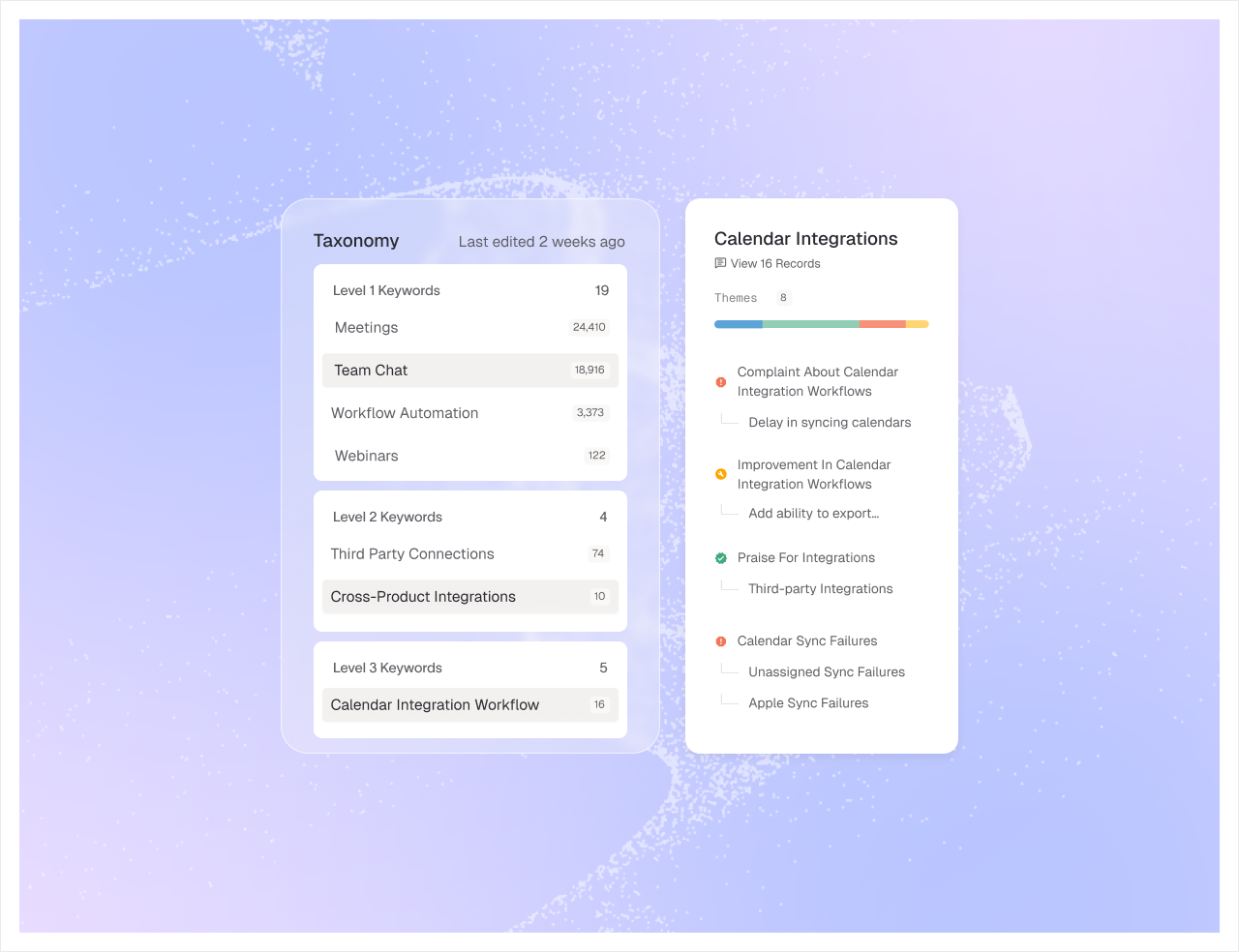
Let AI handle the heavy lifting by unifying feedback and structuring it into layered, customizable themes and reasons

Lorem ipsum dolor sit amet adipiscing elit
Let AI handle the heavy lifting by unifying feedback and structuring it into layered, customizable themes and reasons

This is the third box text for the scrolling component on the Enterpret site
Let AI handle the heavy lifting by unifying feedback and structuring it into layered, customizable themes and reasons


Fourth box text for the scrolling component on the Enterpret site
Let AI handle the heavy lifting by unifying feedback and structuring it into layered, customizable themes and reasons

“Before Enterpret, we relied heavily on human categorization, which limited us to what we thought to look for. Now the structure is automatically maintained and patterns surface reliably without rework. What used to take two weeks now takes three days, making it easier to answer ad hoc product questions, validate hypotheses, and inform planning.”

Enterpret replaces manual workarounds with infrastructure
• Structure is defined once, then drifts as feedback, products and language evolve
• Deeper questions require re-tagging data or rebuilding analysis from scratch
• Product judgment and memory fill the gaps as the system stops holding
• Structure continuously maintained as feedback evolves, meaning holds over time
• Teams can go deeper by segment, trend, or change without rework
• Preserves context and links feedback to customer, product and revenue impact
.webp)
Maintain feedback structure as products, customers, and language evolve, so categorization stays accurate over time without manual upkeep.
.webp)
Answer deeper questions by segment, trend, geography, or change over time using the same underlying structure, without rework or rebuilds.
.webp)
Preserve meaning and context at the raw feedback layer and get a reliable system of record instead of relying on individual judgment or memory.
How Enterpret Works
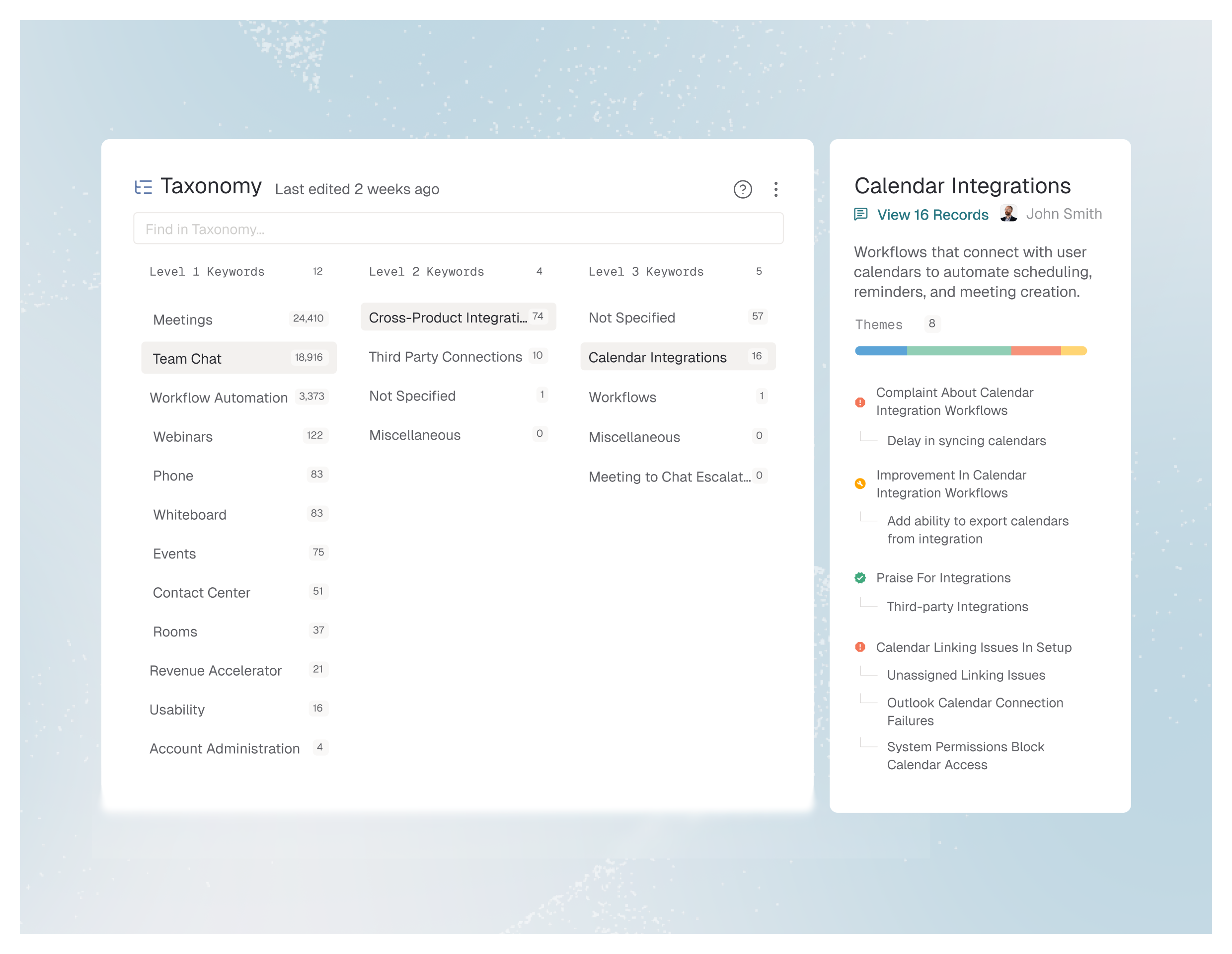
.webp)

Connect feedback from 50+ sources across Zendesk, Gong, Intercom, Salesforce & more
.webp)

Map feedback to customers, features and revenue to uncover impact to outcomes
.webp)

Use AI to automatically organize feedback into layered, customizable themes & reasons
.webp)
.webp)
Use ready-made reports to surface insights for guiding leadership and decisions
.webp)
Use natural language to instantly get answers and data on customer issues
.webp)
Get access to customer insights directly within Slack, ChatGPT, Cursor, and beyond
.webp)
.webp)

Get automatic alerts to high risk feedback and sudden changes in sentiment
.webp)

Create or link Jira and Linear issues directly from feedback, complete with context
.webp)

Auto-generate personalized responses, reply in-channel, and track follow-up
Frequently Asked Questions
Enterpret is for Product and CX leaders at high-scale enterprises who depend on customer feedback to drive product decisions that directly impact revenue, retention, and service outcomes. It is the feedback infrastructure for product decisions that continuously converts customer feedback into decision-grade insight teams can trust, act on and defend. Enterpret builds and maintains the structure, context, and traceability required to make customer feedback reliable and actionable at scale.
Most teams try. The issue isn’t effort or discipline. Feedback structure must be continuously generated, evaluated, and corrected as products, customers, and language change. That requires infrastructure, not periodic fixes.
LLMs can summarize feedback, but they don’t maintain structure over time. Without a durable underlying system, summaries become inconsistent, hard to reproduce, and unreliable as questions get deeper or change.
Enterpret is designed for change. As new features launch, customer segments evolve, or language shifts, Enterpret continuously updates structure so historical and new feedback remain comparable.
No. Enterpret complements research by preserving and structuring ongoing feedback at scale. It helps teams understand what to dig into and where deeper research is needed.
Enterpret is a strong fit for high-scale enterprises who depend on customer feedback to drive product decisions that directly impact revenue, retention, and service outcomes.
This typically includes teams that:
• Receive high volumes of customer feedback across multiple channels (1,000+ monthly feedback)
• Make frequent, high-impact product decisions that require evidence beyond anecdotes
• Need feedback to remain usable over time, not just summarized once
• Have felt internal tooling, spreadsheets, or manual tagging begin to strain as volume and complexity grow
• Want a reliable system, not just faster answers or one-off analysis
Enterpret is most valuable when feedback needs to support ongoing decisions, not just reporting.
