







How to Surface Customer Feedback Insights in Slack

Your PM is in a Slack thread deciding whether to bump a mobile bug or prioritize a new reporting feature. Someone makes a case. Someone pushes back. The thread runs to 23 messages and ends with "let's table it for the roadmap sync."
Nobody checked what customers actually said.
Most teams that care about customer feedback have already invested in collecting it. Ticketing systems, NPS surveys, call recordings, app reviews, maybe even a dedicated analyst whose job is to synthesize it all. They have dashboards. They have reports.
And still, the people making daily product and engineering decisions are mostly operating without it.
The reason is friction. Customer feedback lives in a separate tool. Getting to it means leaving the thread, opening a dashboard, knowing what to search for, and coming back with something useful, all while the conversation has moved on. Most people don't pay that tax. Not because they're checked out. Because the moment is gone.
So decisions run on instinct. On what a few vocal accounts said in recent calls. On whatever someone remembers.
Customer feedback insights need to travel. They need to show up where the question is being asked, not just where the data lives. That's a different problem than building a better dashboard or sending a louder monthly digest.
How to get customer feedback into Slack, and make it stick
1. Map where decisions actually happen
Not every Slack channel needs customer context. But some are where real decisions get made: roadmap discussions, sprint planning threads, exec syncs, customer escalation channels.
Start there. Find the 3–5 channels where you wish customer feedback would show up, and work backwards from those moments.
2. Attach it to rituals that already exist
Adding customer context to a meeting that's already happening works better than scheduling a new one.
A quick feedback summary before a roadmap sync. A prompt in your spec template. A standing section in your weekly product thread. The exact format matters less than placing it somewhere decisions are already being made.
3. Make it something people can ask, not just receive
Pushed summaries are easy to scroll past. What changes behavior is making customer feedback searchable in Slack, something your team can pull on when a specific question comes up mid-thread.
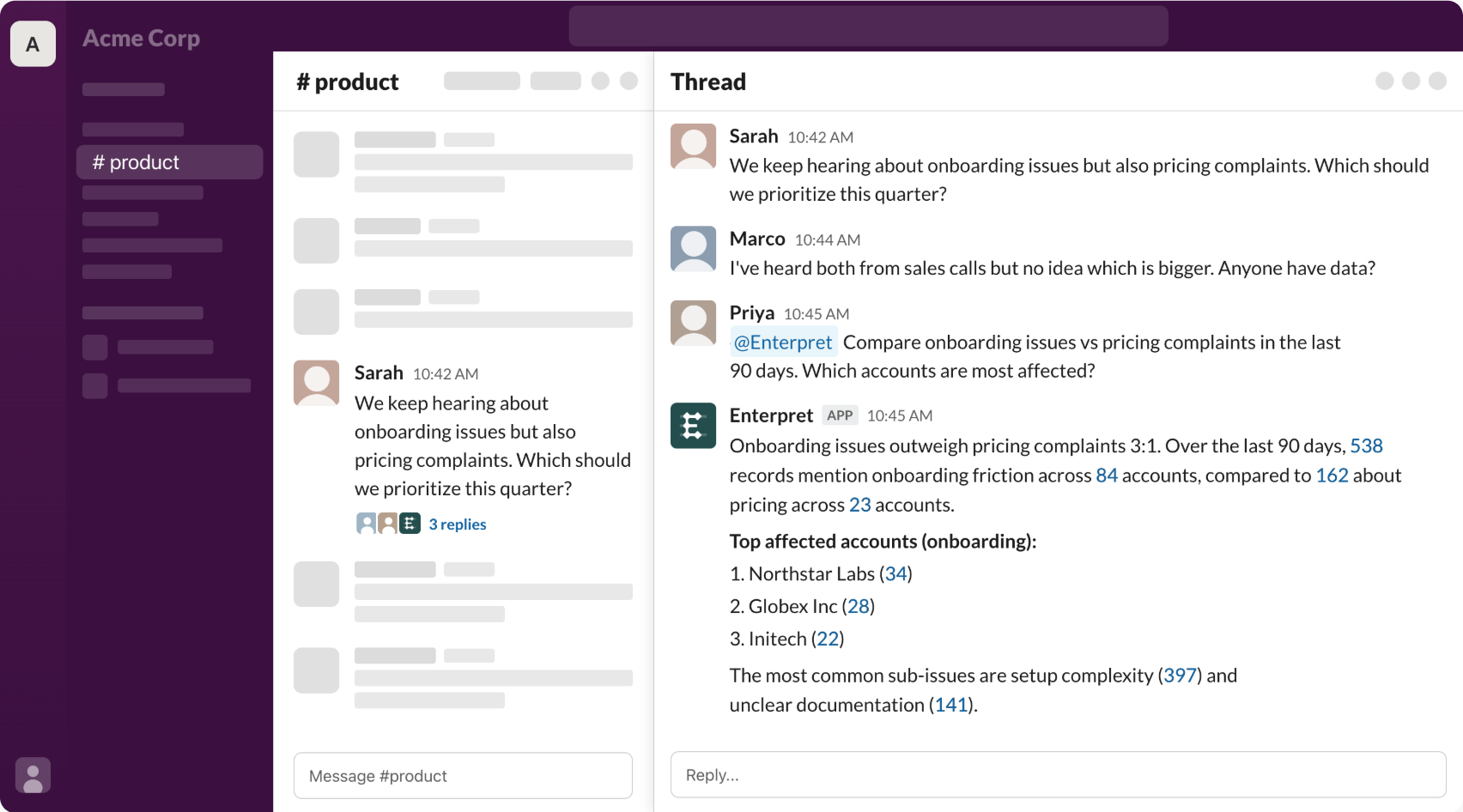
"Here's what customers said this week" is a digest. "@Enterpret, what are enterprise customers saying about our mobile experience?" asked live in a thread, with a cited answer in seconds, that's a different thing entirely. That's what Enterpret on Slack is built for: anyone in your workspace can @mention it in a channel, ask a question in plain English, and get an answer drawn from your actual feedback corpus, with sources linked back to real records.
4. Keep the answer visible to the whole channel
There's a version of this that only helps the person who knows to ask. What shifts team culture is when the answer surfaces in a shared channel, where others see it, follow up on it, and start asking their own questions.
One person asks in #product. Their colleagues see the answer. Next time, they ask their own. That's how the habit spreads.
5. Let proactive intelligence do some of the work too
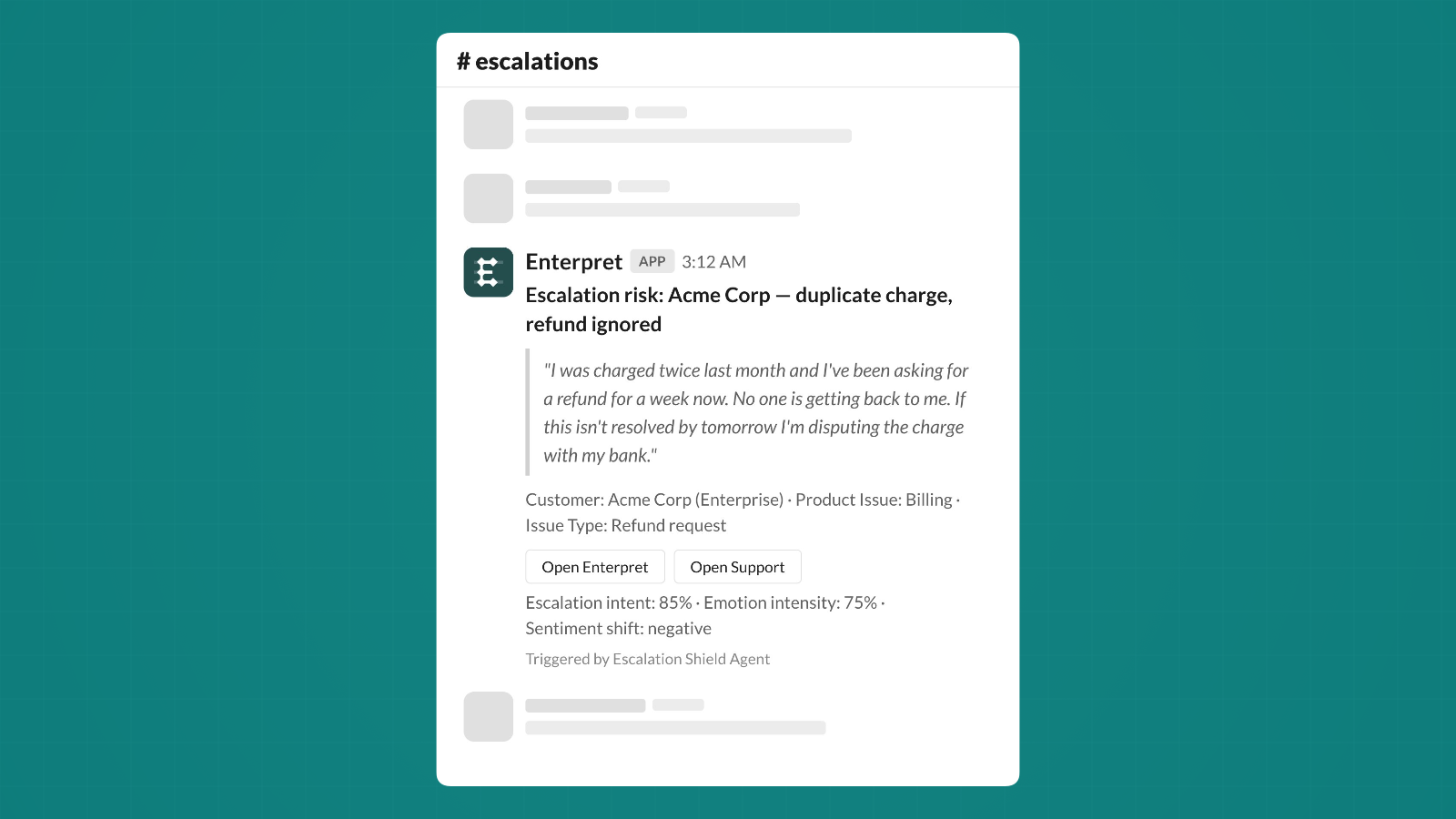
Not every insight starts with a question. Enterpret on Slack also supports Agents, automated alerts that surface escalation risks before they land in your inbox, and Subscriptions, which deliver scheduled feedback digests to the channels that need them. A post-launch feed in #customer-insights. A weekly summary in your roadmap channel. The @mention gets people in the door; proactive delivery keeps customer intelligence ambient.
A product team is debating in Slack: fix a mobile sync issue or ship a new reporting view? Strong opinions on both sides.
Someone @mentions Enterpret directly in the thread. Enterprise accounts have flagged mobile reliability 34 times in Q1, almost always tied to onboarding. The reporting request appears 12 times, mostly from power users in mature accounts.
The conversation shifts. Not because someone had authority. Because the whole channel could see the evidence, without anyone leaving the thread.
Four more messages. Everyone aligned.
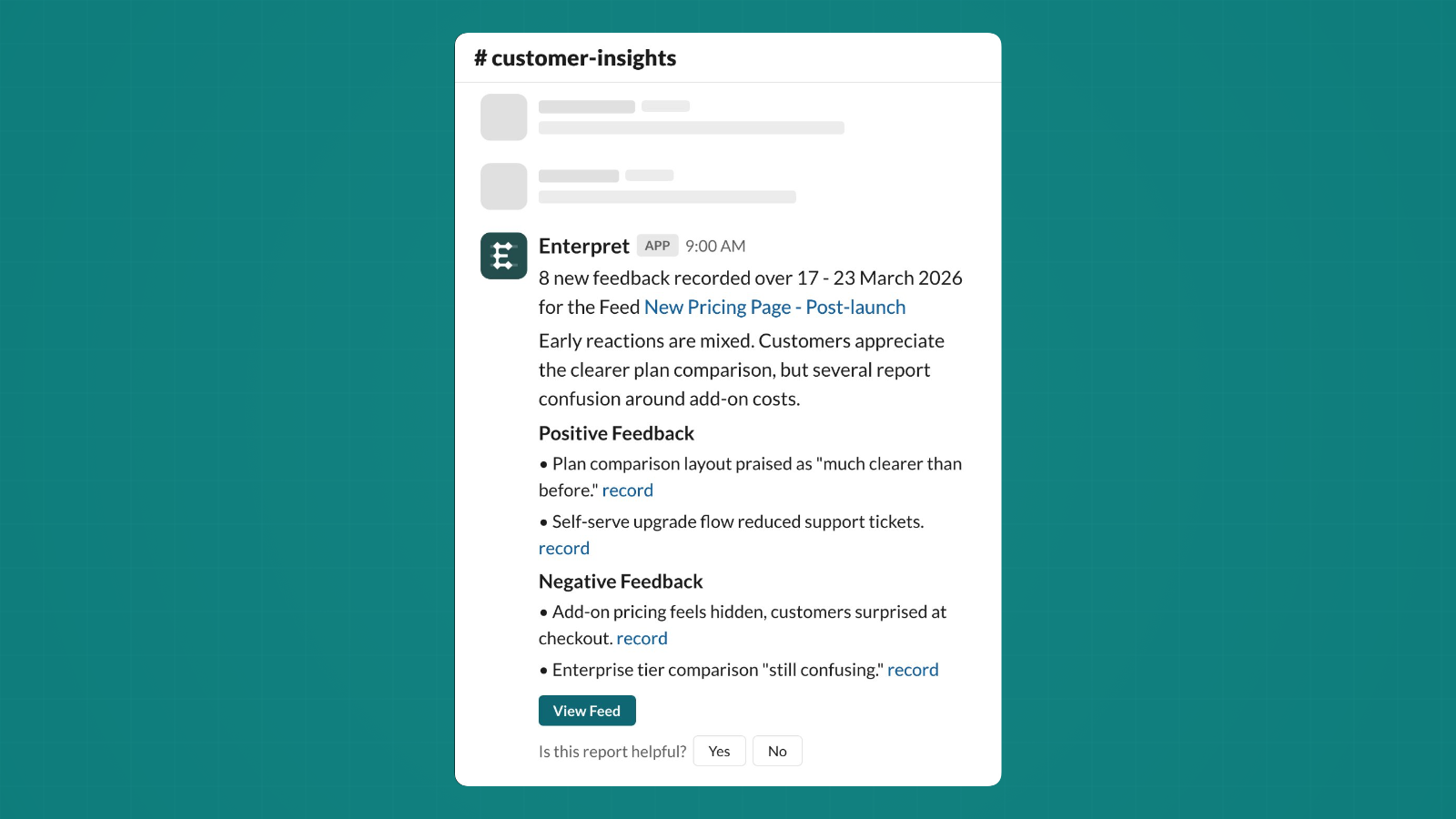
When the reflex is "let's check what customers said" instead of "let's table it for the roadmap sync," the voice of the customer stops being a quarterly report and starts showing up in the moments it can actually do something.
We recently launched Enterpret on Slack, bringing Enterpret's customer intelligence directly into the channels where your team already works. Read more here.


